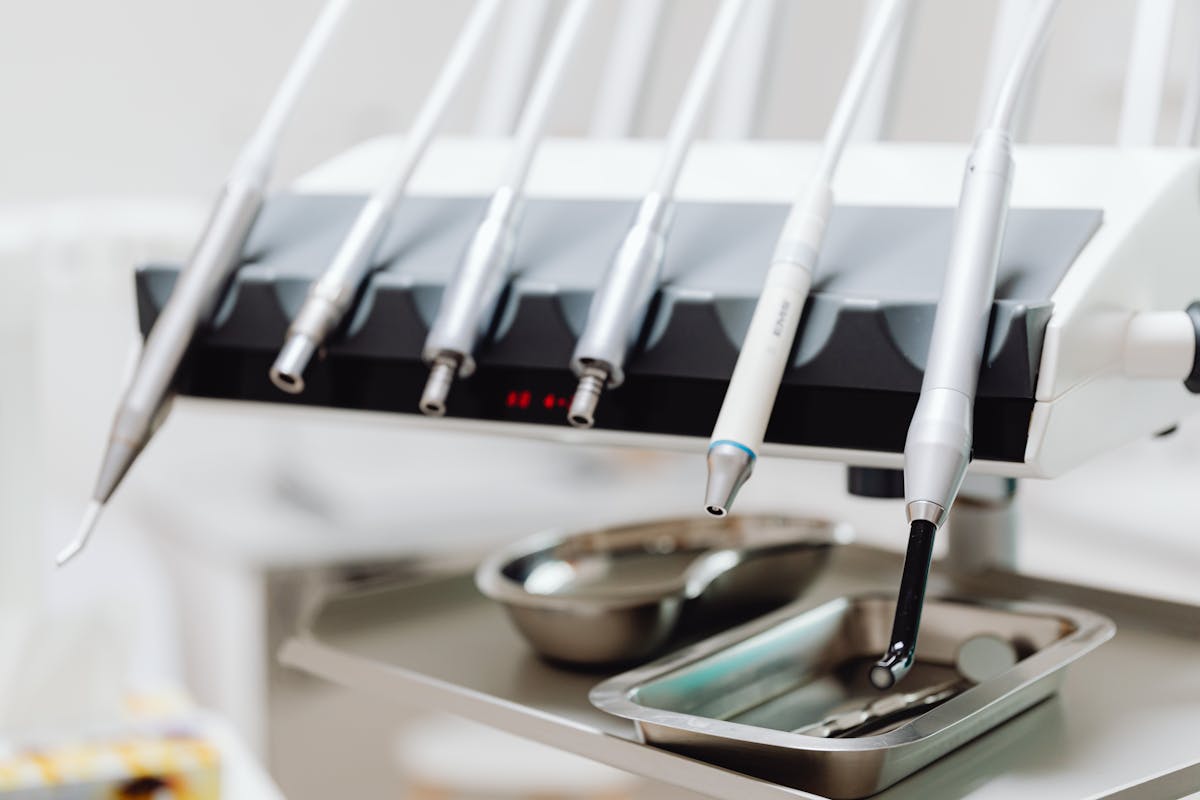
Air polishing has evolved from a specialty technique to an essential component of modern prophylaxis protocols. Whether you're equipping a new practice, upgrading aging systems, or comparing brands for the first time, understanding the landscape of air polishing devices is crucial for making an informed investment. This guide compares ten leading systems across price, features, and practical considerations.
Understanding the Air Polishing Market
The global shift toward minimally invasive prophylaxis has driven rapid innovation in air polishing technology. Today's systems offer unprecedented control over powder particle size, delivery mechanisms, and clinical outcomes. Yet the variety of available options can make selection challenging, particularly when comparing tabletop units with handpieces or evaluating powder compatibility across brands.
Modern air polishing systems fall into two broad categories: standalone tabletop units and handpiece-based systems. Each presents distinct advantages for different practice environments and clinical workflows.
Handpiece-Based Systems
Handpiece systems offer flexibility and lower entry costs. They connect to existing compressor infrastructure and integrate easily into established prophylaxis workflows. These devices are ideal for practices with space constraints or those seeking to upgrade incrementally rather than overhaul their entire delivery system.
Acteon AIR-N-GO
The Acteon AIR-N-GO represents an accessible entry point into air polishing. This 4:1 handpiece connects directly to a standard dental turbine and operates at approximately 5 bar pressure. The device features two selectable modes: supragingival for cosmetic polishing and subgingival for therapeutic applications. With a typical price range of €300–€500, it's one of the most affordable options available.
Key Features: Supra/perio mode switching, turbine-compatible, minimal footprint. Limitations: No independent powder reservoir or temperature control; depends on existing compressor setup.
NSK Prophy-Mate neo
NSK's Prophy-Mate neo is built for clinicians prioritizing ergonomics and durability. The handpiece offers selectable 60° and 80° nozzle angles, allowing customization for different tooth surfaces and anatomical access. All components are fully autoclavable, eliminating cross-contamination concerns and simplifying infection control protocols. Pricing typically ranges from €190 to €315, making it competitive with the Acteon.
Key Features: Autoclavable construction, selectable nozzle angles, Japanese precision engineering. Considerations: Nozzle selection requires manual adjustment rather than electronic switching.
W&H Proxeo Aura
W&H's Proxeo Aura occupies a middle ground between basic and fully featured handpieces. This handpiece includes an adjustment ring for fine-tuning powder delivery intensity without switching devices. The system accommodates multiple quick-coupling options for integration with different compressor systems. Like the NSK, it supports both supragingival and subgingival applications.
Key Features: Adjustable powder intensity, multiple coupling options, integrated feedback mechanism. Price Point: Mid-range handpiece pricing, typically €400–€600.
Woodpecker AP-H
The Woodpecker AP-H is a three-section detachable handpiece designed for maximum portability and maintenance accessibility. Weighing approximately 125 grams, it's among the lighter options available, reducing operator fatigue during extended prophylaxis procedures. The price point ranges from €320 to €350, placing it in the affordable category while offering robust feature sets.
Key Features: Lightweight, three-section design for easy disassembly, reliable Chinese manufacturing. Compatibility: Works with standard dental compressor systems.
Tabletop Systems
Tabletop units represent a more comprehensive investment but offer superior control, integrated features, and often better scalability for multi-operatory practices. These systems typically include dedicated powder reservoirs, temperature control, and advanced delivery mechanisms.
Dentsply Sirona Cavitron Prophy Jet
The Cavitron Prophy Jet brings the trusted Cavitron lineage into air polishing. This tabletop system features Dentsply's proprietary Tap-On Technology, which provides precise control over powder dispensing through a foot-actuated interface. A wireless foot pedal offers greater freedom of movement compared to corded alternatives. The system is priced in the €2,500–€2,700 range.
Key Features: Tap-On Technology for controlled delivery, wireless foot control, reliable ultrasonics heritage. Integration: Works well in practices already invested in Cavitron ultrasonic systems.
EMS AIRFLOW Prophylaxis Master
The EMS AIRFLOW Prophylaxis Master is the flagship system from a pioneer in air polishing innovation. This comprehensive unit integrates three distinct treatment modalities: standard AIRFLOW powder polishing, PIEZON ultrasonic scaling, and PERIOFLOW subgingival delivery. An integrated temperature control system allows heated water or saline delivery, beneficial for patients with sensitivity. Pricing typically ranges from €1,200 to €1,400 (excluding VAT).
Key Features: Three-in-one functionality, temperature control, subgingival capability, proven protocol integration. Powder Flexibility: Compatible with multiple EMS powder formulations. Consideration: Higher end of the investment spectrum but offers integrated scalability.
EMS AIRFLOW ONE
Recognizing the need for a more compact, entry-level tabletop option, EMS introduced the AIRFLOW ONE. This streamlined unit maintains the core AIRFLOW polishing technology while reducing footprint and cost. A touch-panel interface provides intuitive control without excessive complexity. The AIRFLOW ONE is priced between €1,500 and €2,000, positioning it as an accessible tabletop option for smaller practices.
Key Features: Compact form factor, touch-panel control, EMS powder compatibility, simplified maintenance. Use Case: Ideal for single-operatory practices or retrofit situations.
Hu-Friedy PWR Air and PWR Pair
Hu-Friedy's PWR series represents a different approach to tabletop air polishing, integrating ultrasonic scaling capability with air polishing in a unified handpiece system. The PWR Air delivers powder polishing while the PWR Pair combines both modalities in a single device, allowing seamless switching between ultrasonic and air polishing without changing handpieces. This system is particularly valued in practices that emphasize integrated, efficient workflows.
Key Features: Dual modality in single handpiece, PWR Feedback technology for haptic response, reduced chairside switching. Price Range: €1,800–€2,200 depending on configuration.
Mectron Combi Touch
At the premium end of the market, the Mectron Combi Touch represents the most feature-rich tabletop system. This Italian-engineered device includes a glass touch panel interface, dual powder chambers for simultaneous access to multiple powder types, and a lightweight 55-gram handpiece. The system's heating capability supports temperature-controlled delivery, and its modular design allows for future expansion or service without complete unit replacement. Investment ranges from €6,200 to €7,500, reflecting its comprehensive capability set.
Key Features: Dual powder chambers, glass touch interface, lightweight handpiece, premium build quality, EU engineering. Ideal For: Large practices, teaching institutions, or clinics performing high-volume air polishing.
Woodpecker PT-E
The Woodpecker PT-E is a Chinese-manufactured tabletop system combining air polishing with ultrasonic scaling functionality. Dual heating elements allow independent temperature control for polishing and ultrasonic reservoirs. Bluetooth connectivity enables wireless foot pedal operation and compatibility with modern practice management systems. Pricing typically ranges from €800 to €1,200, making it one of the most affordable tabletop options available.
Key Features: Dual heating, Bluetooth foot pedal, ultrasonic integration, competitive pricing. Considerations: Newer brand in European markets; verify service and warranty availability in your region.
Comparison Table: At a Glance
| System | Type | Key Feature | Price Range | Best For |
|---|---|---|---|---|
| Acteon AIR-N-GO | Handpiece | Turbine-connected, supra/perio modes | €300–€500 | Budget-conscious practices |
| Dentsply Cavitron Prophy Jet | Tabletop | Tap-On Technology, wireless pedal | €2,500–€2,700 | Cavitron-invested practices |
| EMS AIRFLOW Prophylaxis Master | Tabletop | Three-in-one (AIRFLOW/PIEZON/PERIOFLOW) | €1,200–€1,400 | Comprehensive treatment needs |
| EMS AIRFLOW ONE | Tabletop | Compact, touch-panel control | €1,500–€2,000 | Space-constrained practices |
| Hu-Friedy PWR Air/Pair | Tabletop | Dual modality, PWR Feedback | €1,800–€2,200 | Integrated workflow optimization |
| Mectron Combi Touch | Tabletop | Dual powder chambers, touch interface | €6,200–€7,500 | High-volume, premium practices |
| NSK Prophy-Mate neo | Handpiece | Fully autoclavable, selectable angles | €190–€315 | Infection control priority |
| W&H Proxeo Aura | Handpiece | Adjustable intensity, multiple couplings | €400–€600 | Flexible compressor integration |
| Woodpecker AP-H | Handpiece | Lightweight, three-section design | €320–€350 | Ergonomics and affordability |
| Woodpecker PT-E | Tabletop | Dual heating, Bluetooth pedal | €800–€1,200 | Budget tabletop solution |
Handpiece vs. Tabletop: Making the Choice
Selecting between handpiece and tabletop systems requires honest assessment of your practice's scale, budget, and workflow priorities.
Choose a handpiece if: Your practice has a limited budget, operates from a single or dual-operatory space, or already has reliable compressed air infrastructure in place. Handpiece systems excel when integrated into existing prophylaxis protocols and require minimal new infrastructure investment. They're also ideal for practices offering air polishing as an occasional service rather than a core protocol.
Choose a tabletop system if: You operate multiple operatories, have dedicated treatment chairs for prophylaxis, or envision air polishing becoming central to your clinical offerings. Tabletop systems offer superior control, integrated features like temperature management and advanced powder delivery mechanisms, and better ergonomics during extended procedures. They're the standard in practices performing high-volume prophylaxis.
Powder Compatibility and Ongoing Costs
System choice directly impacts your powder flexibility and consumable costs, which often exceed initial equipment investment over a system's lifecycle.
Most modern systems accept standard sodium bicarbonate powders (63–100 micrometers), but compatibility varies with advanced formulations. EMS-branded systems work optimally with EMS-manufactured powders, though they generally accept competitor formulations. Mectron's dual-chamber design allows simultaneous use of different powder types—a unique advantage for practices serving diverse patient populations.
Powder costs typically range from €30 to €80 per 500-gram container, depending on particle size and formulation specialty. A high-volume prophylaxis practice may consume 50–100 containers annually, making powder selection a significant budget component. Practices should factor ongoing powder costs into total cost of ownership calculations before equipment selection.
Total Cost of Ownership Framework
Comparing air polishing systems requires looking beyond the sticker price. Consider these factors:
- Equipment cost: Initial purchase price, installation, training
- Infrastructure: Plumbing, electrical, compressor upgrades if required
- Consumables: Powder, water additives, disposable nozzles (if applicable)
- Maintenance: Service contracts, replacement parts, annual calibration
- Downtime: Repair turnaround time and warranty coverage
- Scalability: Cost per operatory if expanding treatment capacity
A tabletop system with a €2,000 sticker price may actually cost €8,000–€10,000 total when accounting for installation, powder purchasing, training, and five years of maintenance. Conversely, a low-cost handpiece of €400 may serve a single operatory efficiently for a decade with minimal peripheral costs.
Clinical Protocols and System Selection
Your intended prophylaxis protocol shapes system selection more than purchase price alone. Modern air polishing protocols diverge in methodology and claimed outcomes, though all are valid clinical approaches.
Practices emphasizing traditional sodium bicarbonate protocols for stain removal and calculus disruption typically succeed equally well across all ten systems reviewed here. Practices interested in glycine powder delivery for subgingival biofilm management should prioritize systems explicitly compatible with glycine (EMS AIRFLOW series, for example).
For practices investigating alternative protocols such as erythritol or amino acid powders—which show emerging evidence for sensitivity reduction and periodontal benefit—confirm powder compatibility with your chosen system before purchase. Some handpiece systems, due to their basic reservoir design, may struggle with specialty powders.
Service, Warranty, and Regional Considerations
Equipment choice isn't complete without evaluating local support infrastructure. Premium brands such as EMS, Hu-Friedy, and Mectron maintain established service networks across Europe and North America. NSK and W&H benefit from their broader dental equipment ecosystems. Acteon operates as part of the Satelec parent company, ensuring parts availability.
Woodpecker systems, while gaining market presence, may have variable service availability depending on your region. Before committing to budget tabletop options, verify warranty terms, service contract availability, and average repair turnaround in your specific geography.
Bottom Line: Recommendations by Practice Type
Solo practices, budget-conscious: The NSK Prophy-Mate neo (€190–€315) offers outstanding value, durability, and autoclavability. If budget allows a modest upgrade, the Acteon AIR-N-GO (€300–€500) provides supra/perio flexibility with similar reliability.
Group practices, moderate investment: The EMS AIRFLOW ONE (€1,500–€2,000) or Hu-Friedy PWR Air (€1,800–€2,200) both offer robust feature sets, excellent service support, and scalability across multiple operatories. Both manufacturers have strong reputations for reliability and training support.
High-volume, specialty practices: The EMS AIRFLOW Prophylaxis Master (€1,200–€1,400) remains the benchmark for three-in-one functionality and integrated protocols. For even greater feature capacity, the Mectron Combi Touch (€6,200–€7,500) justifies premium investment through dual powder chambers and unmatched build quality.
Practices prioritizing emerging protocols: If exploring glycine, amino acid, or other specialty powders, EMS systems provide the broadest compatibility and integrated support. Verify compatibility explicitly before purchase if your protocol prioritizes specific powder types.
Final Thoughts
Air polishing technology has matured substantially in recent years. All ten systems reviewed here represent legitimate clinical choices capable of delivering excellent prophylaxis outcomes. Selection ultimately reflects your practice's priorities: budget constraints, treatment volume, protocol preferences, and service accessibility.
The best air polishing system isn't the most expensive or the most feature-rich—it's the one that fits your practice's current needs, scales with your growth, and receives reliable local support. Take time to evaluate systems within your budget range, request demonstrations from manufacturers, and speak with colleagues using each system you're considering.
Your investment in air polishing systems represents a commitment to prophylaxis excellence that will serve your patients for a decade or more. Choose thoughtfully.