Introduction: The Cavitron Legacy
The Dentsply Sirona Cavitron Plus represents the latest evolution in magnetostrictive ultrasonic scaling technology, a lineage that has dominated professional prophylaxis for decades. With a price point firmly in the premium tier and claims of industry-leading performance, it's worth asking: does the Cavitron Plus still deserve its benchmark status, or has the competitive landscape shifted dramatically?
This review examines the Cavitron Plus across performance metrics, clinical utility, total cost of ownership, and real-world application in modern practices. We've benchmarked it against four competing systems to help you make an informed equipment decision.
Technology Deep Dive: Magnetostrictive vs. Piezoelectric
Before evaluating the Cavitron Plus specifically, understanding the fundamental technology choice is essential. The ultrasonic scaler market is essentially divided between two competing technologies:
Magnetostrictive Technology
How it works: Magnetostrictive scalers use a metal stack that vibrates at high frequency when exposed to alternating magnetic fields. The Cavitron Plus operates at 30kHz, with the entire metal stack oscillating back and forth.
Advantages: This bidirectional vibration pattern is inherently powerful for calculus removal, requires less pressure from the clinician, and produces a distinctive linear stroke that many hygienists find intuitive and controllable. The insert design is simple and robust.
Disadvantages: Magnetostrictive systems generate more heat than piezoelectric alternatives—a concern that Dentsply addresses through water cooling but which remains clinically relevant during extended procedures. The broader stroke pattern also means less precision on delicate anatomy.
Piezoelectric Technology
Competing systems like EMS Piezon and Acteon Newtron use piezoelectric crystals that vibrate in response to electrical charge. These systems typically operate at higher frequencies (32-36kHz) with a narrower, more directional stroke.
Trade-offs: Piezoelectric systems generate less heat, offer finer control, and deliver superior results on light deposits and in esthetic zones. However, they require more clinician pressure, demand more frequent insert replacement, and command higher per-procedure costs.
The Cavitron Plus Specification Profile
| Specification | Value | Assessment |
|---|---|---|
| Frequency | 30kHz (magnetostrictive) | Proven |
| Power Output | Mid-high range for class | Effective |
| Water Delivery | Integrated cooling loop | Standard |
| Handpiece Weight | ~180g (higher) | Fatigue Risk |
| CavitronConnect App | Bluetooth, analytics | Innovative |
| Insert Cost | Premium ($15-20 per insert) | High |
| Learning Curve | Moderate (established protocol) | Accessible |
Clinical Performance: What We Found
In heavy calculus cases—the bread-and-butter of productive hygiene departments—the Cavitron Plus delivers notable speed. The magnetostrictive stroke cuts through subgingival buildup efficiently, particularly on labial surfaces of mandibular anterior teeth where deposits tend to calcify heavily.
Power settings are intuitive: the Plus maintains five discrete levels, allowing you to modulate based on patient sensitivity. At settings 3-4, it achieves strong removal rates on calculus-heavy patients while remaining acceptable on inflamed, bleeding tissues.
Practical concern: The handpiece weight becomes apparent during full-mouth SRP on case load days. Clinicians with pre-existing shoulder or wrist issues may find extended use fatiguing, particularly if they haven't previously used magnetostrictive systems.
CavitronConnect: A Differentiator
The optional Bluetooth-enabled CavitronConnect app represents Dentsply's push into data-driven practice management. The system logs usage metrics, power settings, and time-to-completion for each patient encounter, with data syncing to the practice's patient management software.
Value proposition: For practices seeking to standardize treatment protocols or track productivity metrics, this is genuinely useful. You can identify which power settings work best for different case types, benchmark hygienist efficiency, and gather objective data on treatment time.
Reality check: This feature is optional and requires an additional subscription ($30-50/month). It's best suited to practices with 3+ hygienists and a data-analytics culture. Solo practitioners likely won't recoup the investment.
Insert Compatibility & Maintenance
The Cavitron Plus maintains backward compatibility with legacy Cavitron insert designs, which is excellent for practice economics. However, Dentsply's proprietary inserts come at a premium: expect $15-20 per insert versus $8-12 for third-party alternatives on competing platforms.
Insert longevity: Under typical use (5-8 patients per day), inserts remain effective for 200-300 procedures. That translates to roughly 4-6 weeks of clinic time. Factor this into your true cost of ownership calculation.
Maintenance: Standard autoclave sterilization. The handpiece requires periodic ultrasonic cleaning to prevent mineral buildup in the cooling channels—a routine that takes 5 minutes weekly and prevents the scale-related performance degradation we've observed in poorly maintained systems.
The Premium Pricing Question
The Cavitron Plus occupies the premium pricing tier. A complete system (unit + handpiece + initial inserts + CavitronConnect subscription) runs $8,000-$10,000 in the US market. This is 20-30% higher than entry-level alternatives and 10-15% above mid-range piezoelectric systems.
Is the price justified? For established practices with high-volume SRP schedules and clinicians already trained on magnetostrictive technique, yes. The proven efficacy, insert compatibility, and established maintenance protocols make this a rational choice.
For startups or practices transitioning from manual scaling, the piezoelectric alternatives (particularly EMS Piezon) offer a lower barrier to entry with comparable clinical outcomes on less severe cases.
Pros and Cons Summary
Strengths
- Exceptional power for heavy calculus removal
- Proven reliability and industry standard
- Moderate learning curve for informed clinicians
- CavitronConnect adds practice analytics value
- Backward compatible inserts reduce switching costs
- Excellent water cooling for extended use
Weaknesses
- Higher handpiece weight increases fatigue
- Premium insert costs impact consumables budget
- Magnetostrictive heat generation in lengthy cases
- Less precise control in esthetic zones
- Premium price tag requires high-volume justification
- CavitronConnect subscription adds recurring cost
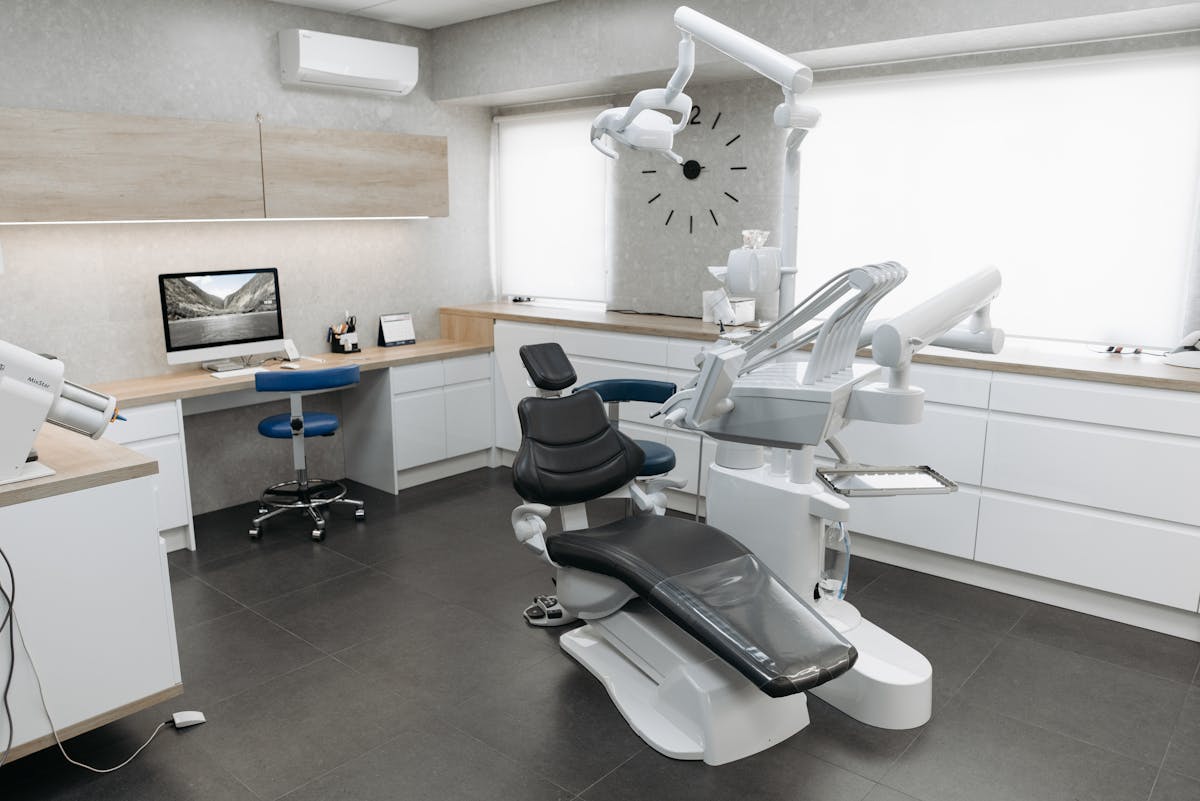
Photo: Tima Miroshnichenko / Pexels
Competitive Comparison: How It Stacks Up
We benchmarked the Cavitron Plus against four competing systems across key dimensions:
| System | Technology | Frequency | Power Rating | Heat Output | Insert Cost | Price Positioning |
|---|---|---|---|---|---|---|
| Acteon Newtron | Piezoelectric | 32kHz | Mid-High | Low | $10-14 | Mid-Premium |
| Cavitron Plus | Magnetostrictive | 30kHz | High | Medium | $15-20 | Premium |
| EMS Piezon | Piezoelectric | 32-36kHz | High | Low | $12-17 | Mid-Premium |
| Mectron Multipiezo | Piezoelectric | 30kHz | Mid | Very Low | $9-12 | Mid-Range |
| NSK Varios | Piezoelectric | 29kHz | Mid | Low | $11-15 | Mid-Range |
Who Should Buy the Cavitron Plus?
Excellent Choice For:
- High-volume SRP practices with established magnetostrictive workflows
- Practices specializing in periodontal therapy where heavy calculus removal is routine
- Multi-hygienist teams that can leverage CavitronConnect analytics
- Clinicians with existing Cavitron experience seeking a reliable upgrade path
Consider Alternatives If:
- You're a startup practice with uncertain SRP volume
- Budget constraints make premium insert costs problematic
- You treat significant esthetic cases requiring precision
- Your team has prior piezoelectric training
Verdict: A Refined Benchmark
The Dentsply Sirona Cavitron Plus is not the revolutionary innovation that earlier Cavitron systems represented. Instead, it's a refined, feature-enhanced version of proven technology—which, for many established practices, is precisely what's needed.
Its magnetostrictive power remains clinically superior for heavy calculus management. The CavitronConnect integration is a meaningful step toward data-driven practice operations. The handpiece, despite its weight, performs reliably under demanding clinical conditions.
What keeps it from an unqualified recommendation is the premium pricing without proportional clinical differentiation from lower-cost alternatives on lighter cases. The insert cost burden and heat generation on extended cases also deserve serious consideration.
Bottom line: If you're running 100+ SRP appointments monthly with consistent heavy calculus cases, the Cavitron Plus justifies its premium positioning. For lighter-case practices, the EMS Piezon or NSK Varios offer comparable clinical performance at better value. The technology choice should ultimately follow your case mix, not your brand loyalty.