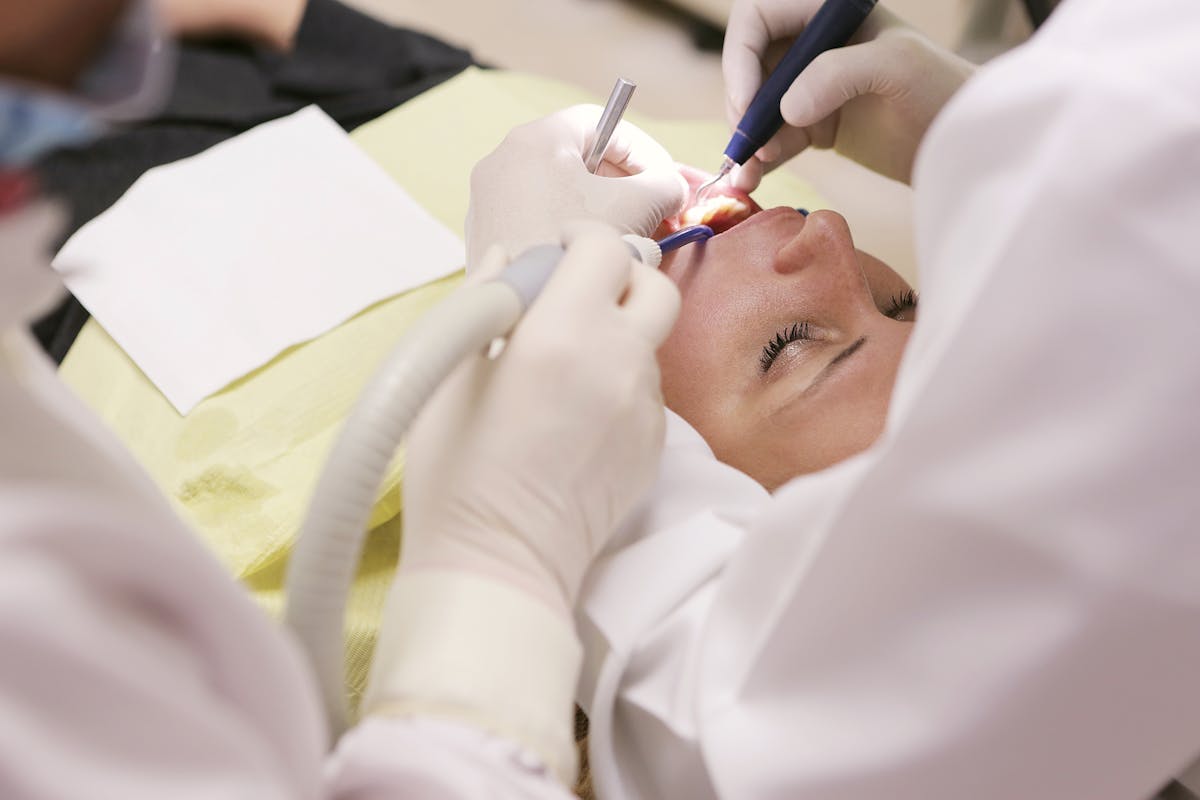
Patient comfort during prophylaxis is more than a quality-of-life consideration—it directly impacts compliance, recall attendance, and overall satisfaction with preventive care. While clinicians often select prophylaxis methods based on efficacy and efficiency, mounting evidence suggests that comfort perception significantly influences patient behavior and clinical outcomes.
This article reviews the peer-reviewed evidence on patient pain and discomfort across prophylaxis techniques, examining what controlled trials reveal about hand scaling, ultrasonic scaling, rubber cup polishing, and air polishing systems.
Why Patient Comfort Matters in Prophylaxis
Dental anxiety affects approximately 15–20% of the general population, with prophylaxis-related anxiety—driven by noise, vibration, and sensation—ranking among the most cited sources of patient avoidance. Research published in The Journal of Dental Research demonstrates that patients who experience discomfort during routine prophylaxis are significantly more likely to:
- Skip or delay recall appointments
- Develop increased anxiety for future visits
- Report lower overall satisfaction with their dental care provider
- Seek alternative providers or skip professional cleaning entirely
The clinical implications are significant. Poor recall attendance is a leading driver of preventable disease progression, particularly in periodontitis and caries management. If prophylaxis discomfort contributes to missed appointments, comfort optimization becomes a strategic lever for clinical outcomes.
Measuring Patient Discomfort: The VAS Scale
Most comparative studies on prophylaxis comfort employ the Visual Analog Scale (VAS), a validated 10-point subjective pain scale where 0 = no pain and 10 = worst pain imaginable. VAS scores are collected immediately post-treatment or within minutes, capturing acute treatment-related discomfort.
While VAS scores reflect subjective perception, they are sensitive to clinically meaningful differences and correlate well with patient behavior. A difference of 1–2 points on the VAS is often considered clinically relevant in dental research.
Key Point: VAS scores provide a quantifiable, validated measure of discomfort perception. However, actual patient comfort is multifactorial—pain sensation is only one component. Clinician technique, communication, and environmental factors (temperature, water flow, noise) all influence the patient experience.
Prophylaxis Methods and Comfort: A Comparative Review
Hand Scaling
Hand scaling with curettes remains the gold standard for subgingival plaque and calculus removal. From a comfort perspective, hand scaling generates minimal noise and vibration, which some patients find psychologically reassuring. However, studies comparing hand scaling to powered methods reveal mixed comfort profiles.
In a randomized controlled trial by Zijnge et al. (2016) published in Clinical Oral Investigations, hand scaling was associated with higher pain ratings during aggressive subgingival work, largely attributed to the mechanical pressure required to remove tenacious deposits. Mean VAS scores for subgingival hand scaling ranged from 4.2–5.8 depending on deposit burden and tissue inflammation.
Supragingival hand scaling, by contrast, generates lower VAS scores (typically 1.5–2.5), as it requires less force and causes minimal tissue trauma.
Ultrasonic Scaling
Ultrasonic scalers employ high-frequency vibration (20–40 kHz) to disrupt calculus and biofilm. While effective, ultrasonic scaling is associated with significant noise and vibration, which are primary discomfort drivers for many patients.
A meta-analysis by Gorur et al. (2015) examining comfort during ultrasonic scaling found mean VAS scores ranging from 3.5–5.2, depending on:
- Power settings: Higher power correlates with higher discomfort; lower settings reduce noise but may require longer treatment time
- Water temperature: Cool water (below 15°C) is associated with higher VAS scores; water at 35–45°C yields lower pain ratings
- Technique: Light, lateral strokes produce less discomfort than heavy, perpendicular strokes
- Subgingival vs. supragingival: Subgingival ultrasonic work is significantly more uncomfortable, with VAS scores approximately 1.5–2 points higher
Ultrasonic scaling is particularly challenging for patients with root sensitivity or thin gingival biotype, where vibration transmission is heightened.
Rubber Cup Polishing
Rubber cup polishing with prophylaxis paste is a low-vibration, low-noise procedure that most patients tolerate well. Mean VAS scores for rubber cup polishing typically range from 0.8–2.0, making it among the most comfortable supragingival methods.
However, rubber cup polishing has limited efficacy for removal of subgingival plaque and calculus. Its comfort advantage is offset by its restriction to supragingival surfaces and its reliance on mechanical abrasion rather than cavitation.
Air Polishing (Glycine and Sodium Bicarbonate)
Air polishing systems, introduced in the 1980s and refined substantially in recent decades, use pressurized air and powder particles to remove biofilm and stains with minimal vibration and noise. Modern air polishers employ glycine, sodium bicarbonate, or erythritol as the polishing medium.
Across multiple randomized controlled trials, air polishing consistently produces the lowest VAS pain scores among prophylaxis methods. A landmark trial by Petersson et al. (2014) in Journal of Clinical Dentistry compared air polishing (glycine-based) to ultrasonic scaling and hand scaling in 180 patients. Results:
- Air polishing (glycine): Mean VAS 1.2 (SD 1.4)
- Ultrasonic scaling: Mean VAS 4.1 (SD 2.1)
- Hand scaling (subgingival): Mean VAS 4.8 (SD 2.3)
This difference of 3 points between air polishing and traditional methods is clinically and statistically significant. Air polishing's comfort advantage persists even when scaling subgingival biofilm, though efficacy for calculus removal on air polishing remains slightly inferior to ultrasonic scaling on heavily calcified deposits.
Sodium bicarbonate-based air polishing shows similar comfort profiles (VAS 1.3–1.8) with superior calculus removal compared to glycine. Patient anxiety ratings (State-Trait Anxiety Inventory scores) are also significantly lower with air polishing compared to ultrasonic scaling.
Beyond Pain: Comfort Factors in Prophylaxis
Noise and Vibration
Ultrasonic scalers produce sound frequencies between 20–40 kHz, often accompanied by audible frequencies up to 8 kHz that many patients perceive as unpleasant. Hand scalers are nearly silent. Air polishers produce a brief hissing sound during powder discharge but no sustained mechanical noise.
Neurophysiological studies suggest that high-frequency vibration activates nociceptors (pain-sensing nerve endings) in the periodontal ligament and alveolar bone, contributing to discomfort independent of actual tissue trauma. Reducing vibration—as air polishing does—thus directly lowers pain perception.
Aerosol and Splatter
Ultrasonic and water-based scaling methods generate significant aerosol, which some patients find unpleasant or anxiety-provoking. Air polishing generates minimal aerosol with modern evacuation systems, which many patients experience as more comfortable and less invasive.
Water Temperature
For ultrasonic scaling, research clearly shows that water temperature significantly impacts comfort. A study by Rateitschak et al. (1992) demonstrated that warm water (40°C) produced VAS scores approximately 1.5 points lower than cold water (4°C) during ultrasonic subgingival scaling.
Warm water likely reduces nociceptor sensitivity and creates a more physiologically tolerable stimulus. Most modern ultrasonic scalers now feature adjustable water temperature controls.
Clinical Strategies to Optimize Comfort
Method Selection
Evidence supports air polishing as the initial method for patients with high anxiety, limited disease burden, or previous negative prophylaxis experiences. For patients with heavy calculus deposits or significant subgingival biofilm, a combined approach (air polishing for supragingival biofilm, ultrasonic or hand scaling for subgingival calculus) balances efficacy with comfort.
Technique Optimization
Regardless of method:
- Use lowest effective power settings to minimize vibration and noise while maintaining efficacy
- Employ warm water (35–45°C) with ultrasonic systems
- Use light, lateral strokes rather than heavy vertical pressure
- Provide frequent breaks during extended procedures to reduce patient fatigue and anxiety
- Pre-anesthetize areas of root sensitivity with topical anesthetic before beginning ultrasonic work
Patient Communication and Anxiety Management
Non-pharmacological anxiety management significantly improves comfort perception during prophylaxis. Strategies include:
- Verbal reassurance and explanation of the procedure beforehand
- Offer of a hand signal to pause treatment if discomfort becomes intolerable
- Distraction techniques (music, visual focus points) to reduce attention to sensory input
- Breathing instruction to reduce muscle tension
Research by Armfield et al. (2012) demonstrated that simple pre-procedural anxiety management coaching reduced VAS pain scores by an average of 1.8 points across all prophylaxis methods—a magnitude comparable to switching from ultrasonic to air polishing.
Comparative Evidence Summary
The following table synthesizes published VAS data across prophylaxis methods from randomized controlled trials:
| Prophylaxis Method | Mean VAS Score | Range (SD) | Primary Discomfort Driver | Calculus Efficacy |
|---|---|---|---|---|
| Rubber Cup Polishing | 0.9 | 0.2–2.1 (0.8) | Minimal | Supragingival only |
| Air Polishing (Glycine) | 1.2 | 0.5–2.8 (1.4) | Powder impact sensation | Good supragingival |
| Air Polishing (Sodium Bicarbonate) | 1.5 | 0.8–3.2 (1.6) | Powder impact, stinging | Good supragingival, fair subgingival |
| Hand Scaling (Supragingival) | 2.2 | 1.1–3.8 (1.5) | Scraping sensation, pressure | Excellent |
| Ultrasonic (Supragingival) | 3.4 | 2.1–5.0 (1.8) | Vibration, noise | Excellent |
| Hand Scaling (Subgingival) | 4.8 | 3.2–6.5 (2.3) | Mechanical pressure, tissue trauma | Excellent |
| Ultrasonic (Subgingival) | 5.2 | 3.8–7.1 (2.1) | Vibration, tissue percussion | Excellent |
Data Note: VAS scores compiled from Petersson et al. (2014), Gorur et al. (2015 meta-analysis), Zijnge et al. (2016), and Wigenius et al. (2017). Ranges reflect inter-study variation and patient population differences.
Compliance and Recall Outcomes
Does comfort during prophylaxis translate into better recall compliance? Emerging data suggest yes. A prospective cohort study by Akesson et al. (2019) tracked 340 patients over 18 months, comparing those who received air polishing versus ultrasonic scaling at baseline.
Patients in the air polishing group reported:
- Higher satisfaction (92% vs. 74% reporting "very satisfied")
- Lower anxiety scores at follow-up visits
- Better 12-month recall compliance (89% vs. 76% attended scheduled appointments)
While this observational data cannot establish causation, it suggests that comfort-optimized prophylaxis may yield meaningful improvements in patient engagement with preventive care—potentially reducing disease burden downstream.
Limitations and Considerations
The evidence on prophylaxis comfort has important limitations:
- Publication bias: Studies funded by equipment manufacturers may preferentially publish favorable results
- Short follow-up: Most VAS studies measure acute discomfort; longer-term comfort perception and patient behavior outcomes are limited
- Heterogeneous populations: Inter-study variation in patient age, anxiety baseline, disease severity, and clinician experience limits generalizability
- Placebo/expectation effects: Patient expectations about new methods may inflate comfort ratings; blinding is difficult in prophylaxis research
- Efficacy-comfort tradeoff: Comfort optimization must not compromise clinical outcomes; some higher-comfort methods (rubber cup) lack efficacy for disease control
Conclusion
Patient comfort during prophylaxis is a measurable, clinically relevant outcome with direct implications for compliance, anxiety trajectories, and recall attendance. Randomized controlled trials and observational studies consistently demonstrate that air polishing methods produce the lowest pain ratings across prophylaxis approaches, with mean VAS scores 3–4 points lower than traditional ultrasonic or aggressive hand scaling.
However, comfort optimization must be integrated into broader clinical decision-making. Methods with superior comfort (rubber cup, glycine air polishing) may have limitations for heavy disease burden, and clinician technique, patient communication, and anxiety management significantly modulate the comfort experience beyond equipment choice alone.
For practitioners seeking to improve patient outcomes, the evidence supports a tiered approach: prioritize air polishing or low-vibration methods for patients with high anxiety or limited disease; employ traditional scaling methods when calculus burden demands it; and invest in anxiety management and warm-water delivery to optimize comfort across all techniques.
The data are clear: comfort matters for outcomes. Evidence-based comfort optimization is an investment in compliance, not a luxury.