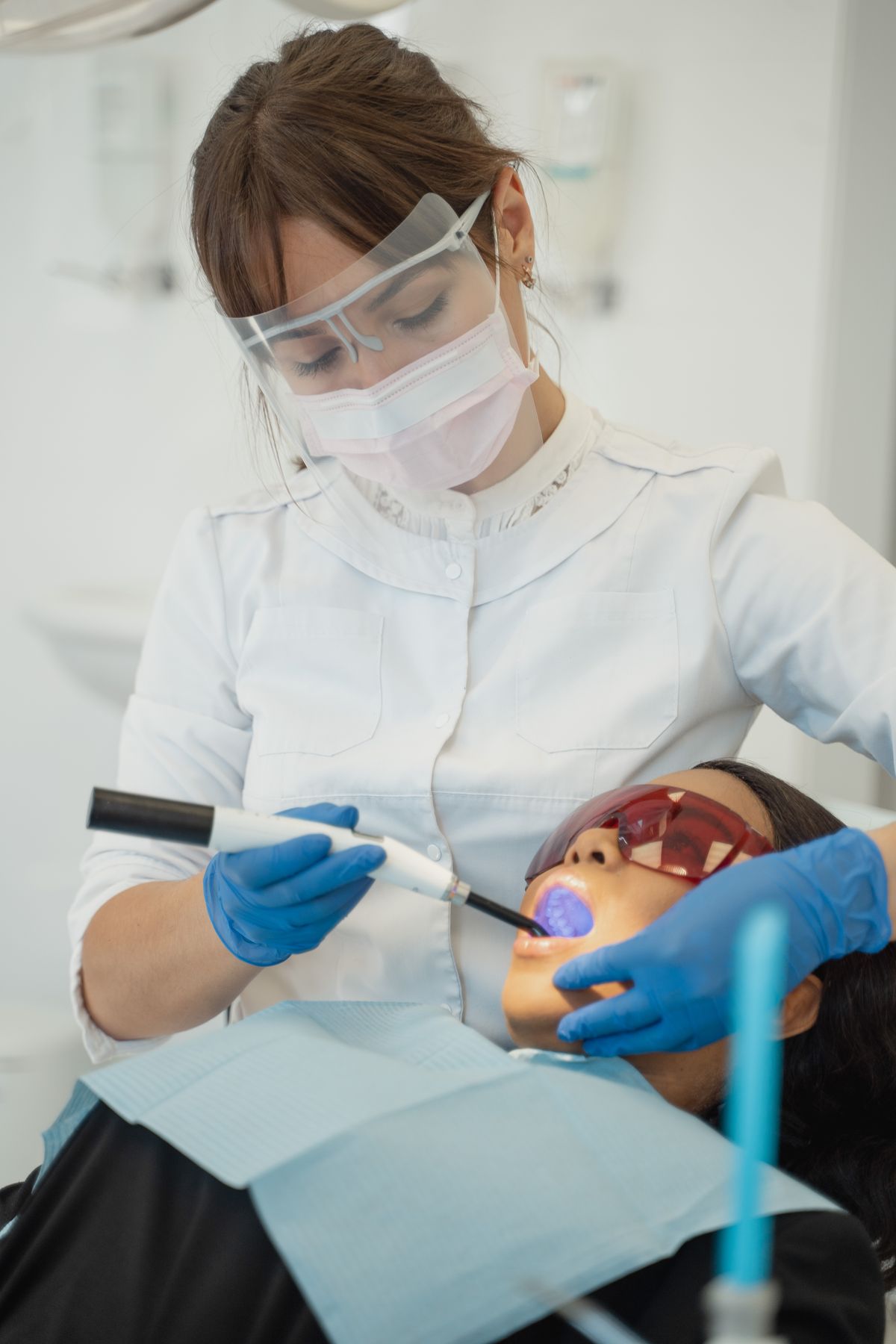
In dental prophylaxis, the equipment in your operatory rarely determines the quality of your outcomes. What matters far more is having a systematic protocol—a structured approach to patient assessment, biofilm removal, and education. Yet the industry has long invested considerable energy in debating which equipment brand, which system, which methodology reigns supreme. This article presents an evidence-based look at three major prophylaxis protocols: Guided Biofilm Therapy (GBT), Individually Trained Oral Prophylaxis (iTOP), and traditional Scaling and Root Planing (SRP). The conclusion is clear: the protocol matters more than the brand.
The Case for Systematic Protocols
Before examining individual protocols, it's worth asking why standardization matters at all. Research consistently demonstrates that variation in clinical practice leads to variation in outcomes. When clinicians operate under a systematic framework—regardless of which equipment they use—they achieve more predictable results, reduce treatment time, lower costs, and improve patient satisfaction.
A core insight from modern clinical guidelines is that any systematic approach outperforms ad-hoc cleaning. The European Federation of Periodontology (EFP) S3 Clinical Practice Guidelines, developed by 90 experts across 19 countries, explicitly recognize this principle. Rather than mandating specific equipment, the EFP guidelines remain flexible about tools while emphasizing the importance of structured, risk-stratified care. Similarly, the British Society of Periodontology's adaptation of the EFP guidelines includes 62 evidence-based recommendations, with 100% consensus around the recommendation for Periodontal Maintenance and Prevention Review (PMPR).
The key takeaway: protocols create accountability, reproducibility, and measurable improvement. Brand allegiance is secondary.
Understanding the Three Protocols
Guided Biofilm Therapy (GBT)
Guided Biofilm Therapy, developed by EMS and the Swiss Dental Academy in 2016, represents the most systematized approach among the three protocols examined here. GBT follows a rigorous 8-step sequence:
- Assess — Clinical evaluation and periodontal status documentation
- Disclose — Visualization of biofilm using disclosing agents
- Motivate — Patient education and behavior reinforcement
- AIRFLOW — Air polishing for biofilm removal
- PERIOFLOW — Subgingival air polishing where indicated
- PIEZON PS — Ultrasonic instrumentation for calculus removal
- Check — Visual and tactile verification of treatment
- Recall — Establish personalized recall intervals
The protocol mandates biofilm disclosing—a practice that remains dramatically underutilized in traditional SRP but is demonstrably effective at improving targeted removal and patient education. Because GBT requires specific EMS equipment (AIRFLOW, PERIOFLOW, PIEZON), there is a significant upfront capital investment, though this cost is offset for many practices by improved patient compliance and standardized outcomes.
Individually Trained Oral Prophylaxis (iTOP)
iTOP, developed by Curaprox and Dr. Sedelmayer, represents the opposite end of the spectrum from a technological standpoint while sharing GBT's commitment to systematization. iTOP's philosophy centers on patient education and personalized home care as the primary drivers of oral health, with the clinician serving as a "teacher" rather than solely a technician.
The iTOP approach employs a "Touch to Teach" methodology, using modified Bass technique instruction with manual tools and selective instrumentation. The full iTOP training course spans 6 hours: 3 hours of theory and 3 hours of hands-on practice. Notably, iTOP incorporates biofilm disclosing implicitly within its educational framework, though less formally than GBT. The protocol assumes that when patients truly understand their own biofilm, behavior change follows naturally.
A prospective cohort study of iTOP demonstrated sustained long-term oral health improvements, suggesting that the emphasis on patient behavior modification creates durable clinical benefits. The low equipment cost and accessibility of iTOP make it particularly valuable for practices in resource-limited settings or those prioritizing patient autonomy.
Traditional Scaling and Root Planing (SRP)
Traditional SRP remains the most widely practiced approach globally, relying on hand instruments (curettes) and/or ultrasonic scalers employed according to clinician judgment. Unlike GBT and iTOP, traditional SRP is not standardized; approaches vary considerably based on individual clinician training, experience, and philosophy.
Traditional SRP has clear advantages: lower equipment cost, no specialized training requirements, and adequate clinical outcomes for many patients. However, this non-standardization comes with trade-offs. Patient pain perception tends to be higher with traditional SRP. Biofilm disclosing is often omitted. Clinical outcomes are less predictable, variation between clinicians is greater, and the lack of systematic patient education can result in less durable oral health improvements.
What Does the Evidence Show?
The most relevant recent evidence comparing GBT and traditional SRP comes from a 2024 study published in BMC Oral Health. This research found that GBT was noninferior to traditional SRP—meaning it achieved equivalent clinical outcomes, not superior ones.
Specifically, the study measured pocket closure at two time points:
- 6 weeks: GBT 77.9% vs. SRP 80.1%
- 3 months: GBT 84.1% vs. SRP 84.4%
No statistically significant difference emerged between the protocols. This finding carries important implications: GBT's advantages lie not in superior clinical outcomes, but in other dimensions—shorter treatment time, reduced patient pain, systematic patient education, and elimination of clinician variation. Conversely, the evidence does not support claims that GBT produces better periodontal outcomes than traditional SRP when both are executed competently.
Key Evidence Finding: GBT achieves equivalent clinical pocket closure rates to traditional SRP (no statistically significant difference at 6 weeks or 3 months). The protocol's value lies in systematization, patient education, and clinical predictability—not in superior outcomes.
Comparing the Protocols: A Framework
| Dimension | GBT | iTOP | Traditional SRP |
|---|---|---|---|
| Philosophy | Technology-enabled systematization | Patient education & behavior change | Clinician judgment & skill |
| Key Features | 8-step protocol, mandatory disclosing, AIRFLOW/PERIOFLOW/PIEZON | "Touch to Teach," manual tools, modified Bass | Curettes & ultrasonic scalers, variable approach |
| Biofilm Disclosing | Mandatory | Implicit in education | Often omitted |
| Clinician Training Required | Formal EMS certification | 6-hour iTOP course | Varies widely |
| Clinical Outcomes | Noninferior to SRP (evidence-based) | Long-term improvement (cohort data) | Adequate (highly variable) |
| Patient Pain Perception | Lower | Lower (gentle technique) | Higher |
| Treatment Time | Shorter | Moderate (education-focused) | Variable |
| Equipment Cost | High ($100k+) | Low | Low to moderate |
| Clinician Variation | Minimal (protocol-driven) | Moderate (systematic but flexible) | High (judgment-dependent) |
| Accessibility | Requires EMS equipment commitment | High (manual tools, accessible training) | High (established standard) |
The Biofilm Disclosing Advantage
One often-overlooked element deserves emphasis: biofilm disclosing. This simple practice—using a disclosing agent to visualize biofilm—is fundamental to both GBT and iTOP but frequently omitted in traditional SRP. Research demonstrates that disclosing:
- Improves the accuracy of biofilm removal by helping clinicians target specific areas
- Dramatically enhances patient education by making the invisible visible
- Increases patient motivation and accountability for home care
- Creates a teachable moment that improves compliance with oral hygiene recommendations
The fact that disclosing remains underutilized in many traditional SRP practices, despite clear evidence, suggests that standardized protocols like GBT and iTOP have a real advantage in ensuring best practices become routine rather than optional.
Minimally Invasive Prophylaxis: A Shared Trend
One encouraging trend across all modern protocols is a movement toward minimally invasive prophylaxis. Rather than aggressively scaling all tooth surfaces, current evidence supports an air polish-first approach: remove biofilm and light deposits with air polishing, then use hand or ultrasonic instruments only where calculus is present and plaque removal has not succeeded.
This approach preserves tooth structure, reduces unnecessary instrumentation, and delivers equivalent clinical outcomes. Both GBT and iTOP embrace this principle explicitly; traditional SRP practices are increasingly adopting it as well, reflecting the broader shift toward conservative, evidence-based care.
So Which Protocol Should You Choose?
The answer depends on your practice context, philosophy, and resources:
- If you value systematization and are willing to invest in equipment: GBT provides a highly structured, technology-enabled pathway with excellent patient experience and minimal clinician variation. The investment in EMS equipment and formal training pays dividends in consistency and efficiency.
- If you prioritize patient education and behavior change above all: iTOP's "Touch to Teach" methodology and low-cost accessibility make it ideal for practices emphasizing long-term oral health and patient autonomy. The 6-hour training is achievable for any team.
- If you maintain high clinical standards within traditional SRP: Ensure that your practice includes systematic biofilm disclosing, uses a minimally invasive approach (air polish first), and maintains individual continuing education. The quality of execution matters far more than the protocol name.
A fourth option worth considering: many successful practices blend elements of these approaches. You might implement GBT's 8-step framework while incorporating iTOP's emphasis on patient education, or adopt traditional SRP with mandatory biofilm disclosing and minimally invasive sequencing. The protocol that works best is the one your entire team understands, executes consistently, and refines based on patient outcomes.
The Bigger Picture: Guidelines and Risk Stratification
Current evidence-based guidelines from the EFP and BSP share a common framework: risk-stratified care. Rather than applying a one-size-fits-all protocol, patients are assessed for periodontal risk, and recall intervals and treatment intensity are tailored accordingly. A patient with excellent oral hygiene and no periodontal disease requires a different prophylaxis approach than a patient with active periodontitis or a history of disease.
None of the three protocols examined here is inherently incompatible with risk stratification. The best practices will adopt the framework from their chosen protocol while adjusting intensity and recall based on individual patient risk.
Conclusion: Protocol Over Brand
The evidence is unambiguous: having a systematic prophylaxis protocol matters far more than the specific brand of equipment you select. Whether you choose GBT, iTOP, traditional SRP executed with best practices, or a thoughtful hybrid, the commitment to standardization, biofilm disclosing, patient education, and minimally invasive technique will drive superior and more predictable outcomes.
GBT should not be presented as a gold standard—it is one legitimate option among several, with clear advantages in systematization and patient comfort but equivalent clinical outcomes to well-executed traditional SRP. iTOP's patient-centered philosophy offers particular value for those prioritizing behavior change and accessibility. Traditional SRP remains viable when executed with rigor and updated best practices, though its lack of standardization introduces unnecessary variation.
The clinicians and practices achieving the best results are those who have clearly defined their prophylaxis protocol, trained their entire team to execute it consistently, and committed to continuous improvement based on patient outcomes—regardless of which protocol they selected. That alignment between philosophy, training, and execution matters infinitely more than which equipment vendor's logo appears on your instruments.
In prophylaxis, as in most of clinical dentistry, excellence comes from systematization, education, and intentionality. Choose your protocol thoughtfully, execute it expertly, and measure the results. The outcomes will speak for themselves.