Sodium Bicarbonate on Implants: Evidence on Surface Effects
Last updated: April 16, 2026. Article reviewed and updated to reflect current peer-reviewed evidence.
When choosing prophylaxis powders for dental implants, the question of surface compatibility matters profoundly. Sodium bicarbonate has been used in dental hygiene for decades, but in vitro studies over the past five years reveal a consistent finding: sodium bicarbonate's effect on implant abutment surfaces differs markedly from alternatives like glycine and erythritol. This article reviews the published evidence and offers clinicians a basis for informed decision-making.
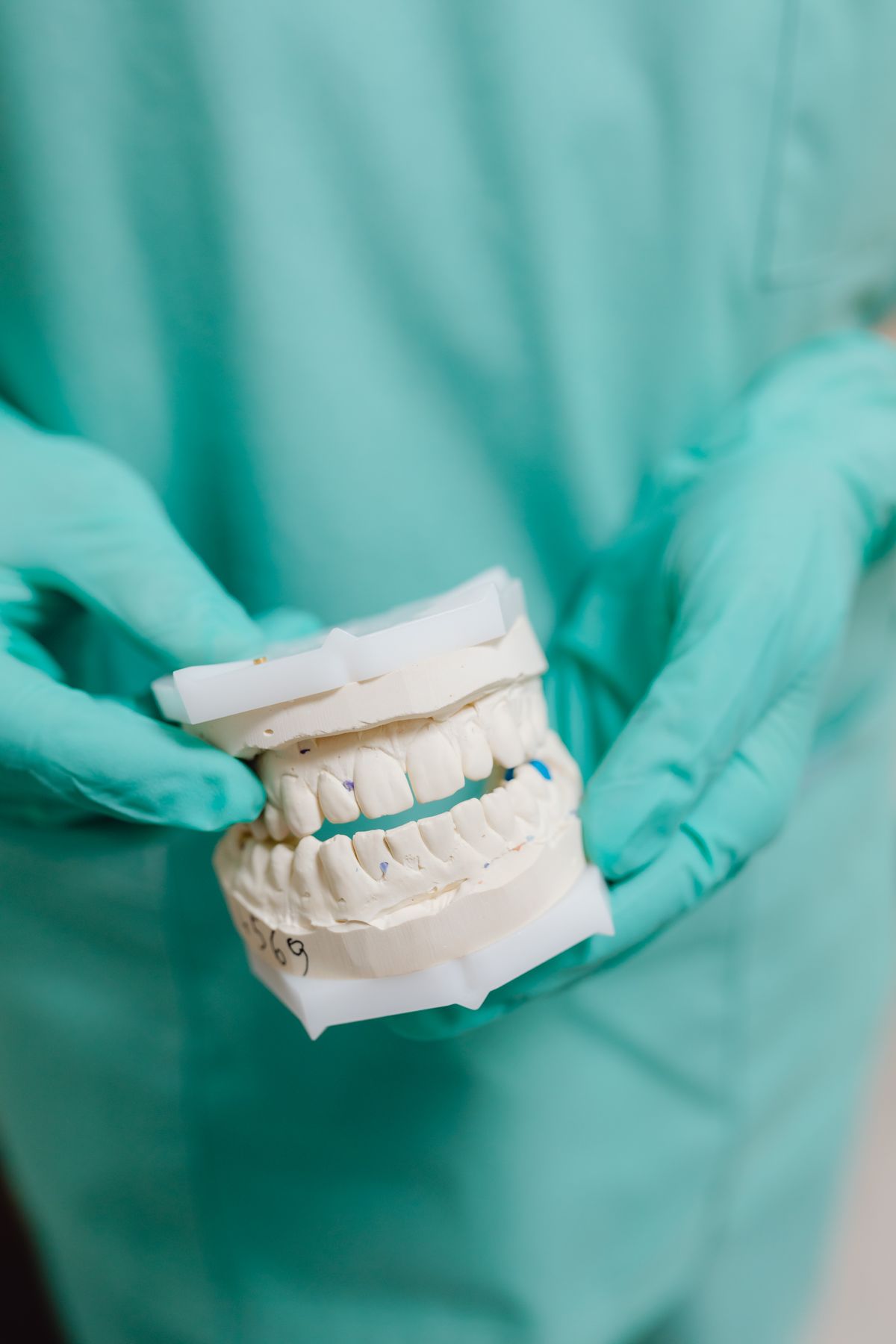
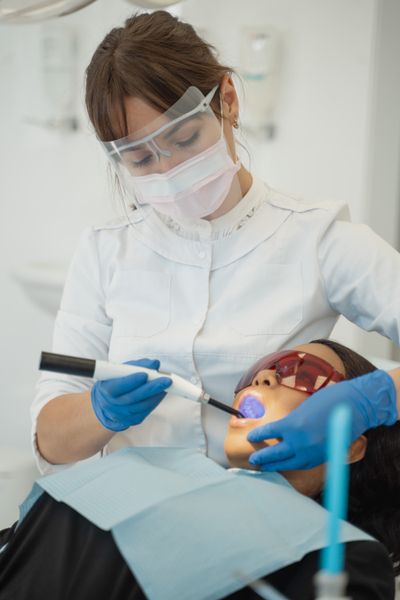
Photo: Karolina Kaboompics / Pexels
What In Vitro Evidence Shows: Sodium Bicarbonate and Implant Surface Roughness
Three independent in vitro studies published between 2019 and 2020 directly compared sodium bicarbonate with fine-particle alternatives on titanium implant surfaces. The evidence points consistently in one direction.
Biazussi et al. (2019): Glycine vs. Sodium Bicarbonate on Titanium Disks
Biazussi, Perrotti, D'Arcangelo, and colleagues tested air-polishing powders on 15 titanium disk samples (5 per group) using standard surface roughness protocols. When comparing sodium bicarbonate to glycine powder, they found that glycine maintained surface roughness values similar to the untreated control, while sodium bicarbonate produced substantially higher roughness increases. This difference was statistically significant and had clear implications: sodium bicarbonate altered the titanium surface more dramatically than the control comparison.
Matsubara et al. (2020): Cleaning Efficiency vs. Surface Preservation
Matsubara, Leong, and colleagues evaluated three abrasive powders on 20 implants, measuring both cleaning efficacy and surface roughness changes. Sodium bicarbonate was the only powder tested that significantly increased implant roughness on both collar and threaded regions. Glycine and erythritol demonstrated no significant changes in surface roughness. The authors noted a trade-off: larger-particle powders (like sodium bicarbonate at 40–65 micrometers) offered superior cleaning but caused greater microscopic surface damage, while finer powders preserved surface integrity.
Sah et al. (2024): Recent Confirmation
More recently, Sah and colleagues (2024) examined sodium bicarbonate, glycine, and erythritol on 30 titanium implant abutments. They confirmed that sodium bicarbonate dramatically increased surface roughness, while glycine and erythritol powders produced minimal changes. The authors concluded that these finer powders represent preferable alternatives for routine implant maintenance.
Summary of Surface Roughness Evidence
In vitro studies consistently show that sodium bicarbonate significantly increases implant abutment surface roughness. Glycine (25 micrometers) and erythritol (14 micrometers) powder alternatives preserve surface characteristics. Whether this laboratory finding translates to clinical peri-implant disease risk remains an area for future research, but the physical difference in surface alterations is well-established.
Why does surface roughness matter clinically?
Increased surface roughness on titanium has long been associated with increased biofilm formation in the literature on implant surfaces. Bacterial biofilms preferentially colonize rough surfaces, which offer increased surface area for attachment. Smooth titanium surfaces present a less favorable environment for microbial adherence. While the studies reviewed here measure roughness in vitro rather than directly measuring clinical peri-implant outcomes, the principle is well-established: smoother surfaces are generally more resistant to biofilm formation.
This distinction matters when selecting between powder types. A powder that preserves surface smoothness—particularly important for the abutment, which is the interface between the implant body and the soft tissues—may offer theoretical advantages over one that increases roughness, all else being equal.
Alternatives: Glycine and Erythritol
Glycine (25 Micrometers)
Glycine powder is widely available, cost-effective, and has an established track record in subgingival air polishing. Multiple studies confirm that glycine maintains implant surface roughness compared to baseline. It represents a straightforward alternative to sodium bicarbonate when the goal is to avoid surface alterations.
Erythritol (14 Micrometers)
Erythritol is the finest powder option and has demonstrated comparable surface preservation to glycine in the studies reviewed. A recent network meta-analysis on subgingival air-polishing powders (Yuan Zi-le et al., 2025) examined nine randomized controlled trials. Erythritol ranked numerically highest on SUCRA probability analysis (SUCRA 84.1 vs. trehalose 48.0 vs. glycine 28.5) for probing depth reduction. SUCRA is a ranking metric that expresses the probability a treatment is the best within the network; it does not, on its own, indicate statistically significant clinical superiority. In this analysis, no pairwise comparison between the three powders reached statistical significance for probing depth reduction. The ranking reflects probabilistic ordering, not a confirmed clinical advantage over glycine.
What does the evidence show on soft tissue and surface effects?
Beyond in vitro studies on implant abutments, two lines of published evidence examine how sodium bicarbonate behaves relative to glycine on living tissue and at the micro-scale of tooth surfaces.
In a double-blind randomized clinical trial on 22 chronic periodontitis patients (Simon et al., 2015), glycine powder air polishing caused only minor erosion of the gingival epithelium (scores 1–2), whereas sodium bicarbonate air polishing and ultrasonic scaling caused moderate to severe erosions (scores 3–4). This is one of the few double-blind clinical comparisons directly measuring tissue impact of the two powders on real patients rather than laboratory specimens.
At the micro-scale, an atomic force microscopy analysis of enamel and cementum surfaces (Tamilselvi et al., 2021) found glycine air polishing produced significantly smoother surfaces than sodium bicarbonate, with the authors reporting that glycine was "the least rough on soft tissues." While this study examined tooth tissue rather than implant abutments, the direction of the effect is consistent with the implant-surface in vitro literature: sodium bicarbonate increases surface roughness relative to glycine.
These two papers add clinical and high-resolution microscopic perspectives that complement the implant-abutment in vitro studies. Taken together, the evidence across study types and tissue substrates points in the same direction — sodium bicarbonate is more aggressive on both surface and soft tissue than lower-abrasive alternatives — though none of these studies directly measures peri-implant health outcomes over time.
Clinical Considerations and Manufacturer Guidance
Most implant manufacturers and professional organizations recommend against sodium bicarbonate for use on implant surfaces and abutments. This guidance typically reflects both the evidence on surface alterations and the historical recognition that lower-abrasive powders were developed specifically to address concerns with sodium bicarbonate's effects. Consulting your implant system's instructions for use and staying aligned with professional society recommendations remains essential for clinical decision-making.
Practical Recommendations
For practices currently using sodium bicarbonate on implants:
- Review your inventory and protocols. Identify where sodium bicarbonate is used—particularly around implant abutments and in subgingival regions.
- Select an alternative. Glycine and erythritol are widely available from major dental suppliers and offer equivalent or superior surface preservation. Either represents a well-supported alternative.
- Train your team. Brief your hygiene team on why the change reflects current evidence and how it affects powder selection for implant patients.
- Consult your implant system instructions. Review the specific implant system's guidance on recommended prophylaxis protocols and approved powder types.
- Document the change. Update your standard operating procedures to reflect the new powder selection for implant prophylaxis.
Limitations and Future Research
The evidence reviewed here is in vitro, meaning it measures surface effects in laboratory conditions rather than directly measuring clinical outcomes like peri-implant health or disease incidence. While the consistency of surface roughness findings across multiple independent studies is reassuring, the clinical significance of these differences—and whether they predict patient outcomes—remains an open question for future research. Some of the studies used different measurement protocols and abutment materials, which can affect direct comparisons.
Additionally, the particles sizes and pressures used in laboratory testing may not precisely mirror clinical air-polishing protocols, so some caution in extrapolation is warranted.
Bottom Line
In vitro evidence from the past five years consistently demonstrates that sodium bicarbonate increases surface roughness on titanium implant abutments more than glycine or erythritol alternatives. While the direct clinical significance of this difference requires further research, the evidence supports a preference for lower-abrasive powders when the goal is to maintain implant surface characteristics. Glycine and erythritol represent well-supported alternatives that are widely available and cost-effective.
Key Studies and References
- Biazussi BR, Perrotti V, D'Arcangelo C, et al. (2019). Evaluation of air polishing with different abrasive powders on implant abutment roughness. Journal of Oral Implantology, 45(3):202–206. PMID 30875272.
- Matsubara VH, Leong BW, Leong MJL, et al. (2020). Cleaning potential of different air abrasive powders and their impact on implant surface roughness. Clinical Implant Dentistry and Related Research, 22(1):96–104. PMID 31837107.
- Sah K, Bamusa A, Mehrotra A, et al. (2024). Comparative evaluation of sodium bicarbonate, glycine, and erythritol powders on titanium implant abutment surfaces. Bioinformation. PMID 40162446.
- Yuan Zi-le, Tang Yan-Xi, Zhou Ying, et al. (2025). Network meta-analysis of air-polishing powders for subgingival use. Frontiers in Physiology. PMID 40791830.
- Simon CJ, Munivenkatappa Lakshmaiah Venkatesh P, Chickanna R. (2015). Efficacy of glycine powder air polishing in comparison with sodium bicarbonate air polishing and ultrasonic scaling — a double-blind clinico-histopathologic study. International Journal of Dental Hygiene, 13(3):177–183. PMID 25727403.
- Tamilselvi R, Pradeep AR, Agarwal E, et al. (2021). Comparison of the effect of sodium bicarbonate and glycine air polishing systems on tooth surface roughness: an atomic force microscopic analysis. Technology and Health Care, 29(4):793–802. PMID 32804106.
- Petersilka GJ, Faggion CM, Stratmann U, et al. (2008). Effect of glycine and sodium bicarbonate air-polishing on gingival tissue. Journal of Clinical Periodontology, 35(4):324–330. PMID 18294230.