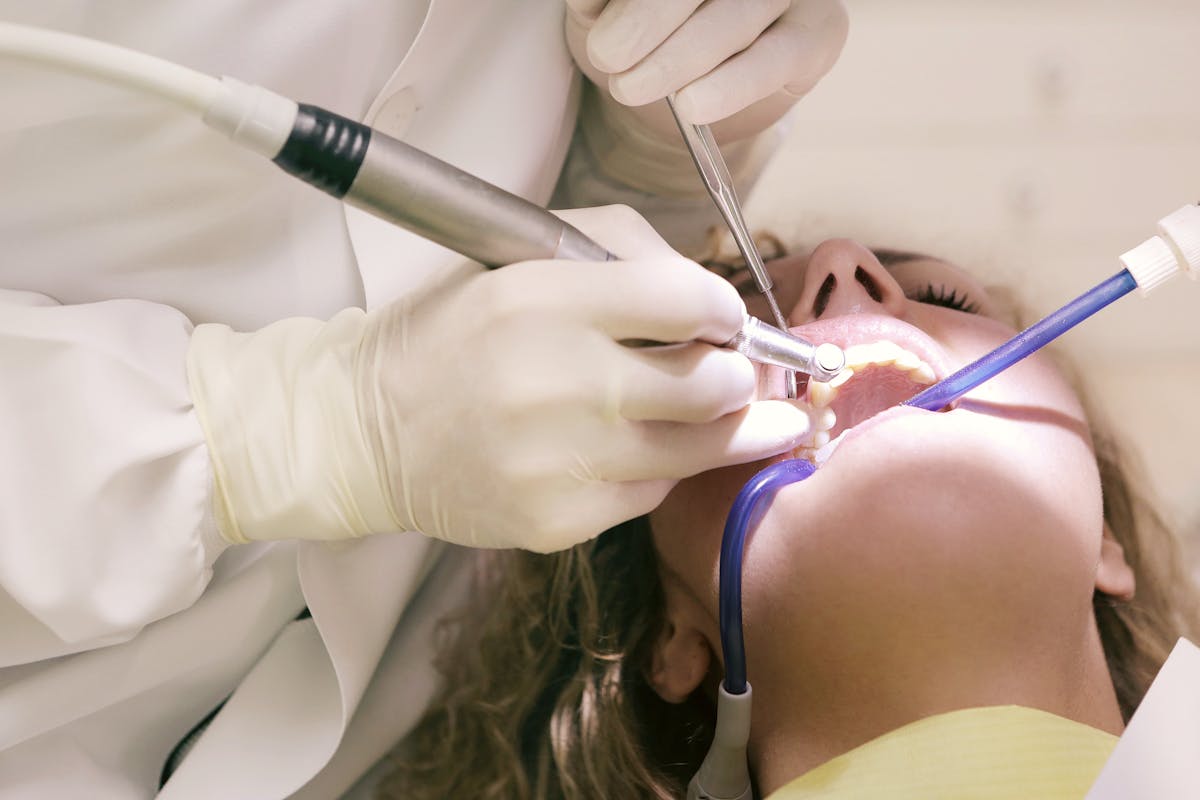
A new entrant in an already busy segment
Hu-Friedy used the 2026 Chicago Midwinter Meeting (held February 19–21 in Chicago) to introduce PWR Air, a dedicated air-polishing device positioned alongside the company's existing PWR Piezo scaler. The device joins a category in which Acteon, Dentsply, EMS, Mectron, NSK, W&H and Woodpecker all already offer air-polishing or combined prophylaxis hardware. It is a notable move for a manufacturer historically better known for hand instruments.
The device was presented at booth #3806, with a secondary demo environment — the "Mobile Air Polishing Experience," an on-site RV fitted out as a hands-on demo space — running throughout the meeting. A dedicated launch event marked the debut on the opening night of the show floor. (Source: PR Newswire; Dentistry Today; Dr. Bicuspid.)
What the manufacturer says PWR Air does
According to Hu-Friedy, PWR Air is designed for "sub- and supragingival stain removal, biofilm disruption, and implant cleaning." The company highlights four functional characteristics on its product pages:
- Dual powder chambers — the device holds two powders simultaneously, with a one-touch switch between a Prophy (supragingival) and a Perio (subgingival) mode.
- Pre-set air pressure — the manufacturer states that air pressure is predetermined and optimised for each mode, rather than adjusted manually by the operator.
- Continuous air flow — intended to help prevent clogging of the powder line during use.
- PWR Prophylaxis Powders — the device runs on Hu-Friedy's own PWR-branded powders, available in mint and neutral flavours and in sub- and supragingival variants.
Hu-Friedy also quotes a time-saving figure of "8–12 minutes per procedure" in its marketing material. This is a manufacturer-reported estimate, not an independently published finding, and the methodology behind it is not disclosed. Clinics evaluating the device should treat it as a claim to verify in a real-world trial rather than a validated specification.
At time of publication Hu-Friedy has not publicly disclosed: handpiece weight, dB rating, water-tank autonomy, operating pressure range (in bar), detailed powder particle-size data, European regulatory status (CE/MDR), country of manufacture, European launch timeline, or price. Buyers should request these from the distributor in writing before purchase.
How does it sit alongside the rest of the market?
Listed alphabetically, the major European air-polishing and combined prophylaxis offerings now include: Acteon (OPUS and Air-N-Go families), Dentsply (Cavitron and Prophy-Jet ranges), EMS (Airflow and combined Airflow/Piezon tabletop systems), Hu-Friedy (PWR Air and PWR Piezo), Mectron (air polishing range), NSK (Prophy-Mate neo and Varios Combi Pro2), W&H (Proxeo Aura), and Woodpecker (AP-H and combined units). This is not an exhaustive list.
Where PWR Air fits in that mix will depend on a few practical questions that manufacturer marketing rarely answers directly.
| Question to ask before buying | Why it matters |
|---|---|
| Which powders does the device run on? | PWR Air is designed around Hu-Friedy's own PWR-branded powders. Clinics already stocking a different powder brand should check compatibility and long-term cost. |
| Is there a subgingival nozzle available? | Sub- and supragingival applications typically require different nozzle geometries. Confirm that both are available in the European SKU. |
| What is the service and training footprint in Europe? | A new entrant's service network may be less dense than established players. Ask about response times, replacement units, and local training. |
| How does the device reprocess between patients? | Reprocessing cycle time, autoclavable components and daily end-of-day routines drive operational overhead in a busy hygiene room. |
| What is the total cost of ownership? | Powder cost per gram, nozzle replacement frequency, and consumables lock-in matter more than the sticker price. |
Context: 2025–2026 has been a busy year for prophylaxis hardware
PWR Air is not the only new arrival. At IDS 2025 in Cologne (March 2025), Acteon launched the OPUS combined ultrasonic + air-polishing platform and NSK launched the Varios Combi Pro2. Both are combined tabletop systems rather than standalone air polishers, and both are already shipping in Europe. The Hu-Friedy device extends the category in a different direction — a single-function air-polishing unit positioned alongside a separate piezo scaler rather than a single combined tabletop system.
From a buyer's perspective, the choice in 2026 is therefore not only which brand but which form factor: a single tabletop system that does both ultrasonic scaling and air polishing, or two dedicated devices working side by side. Neither approach has been shown to be clinically superior in published evidence to date.
What to watch next
We will update this article when Hu-Friedy publishes a European spec sheet, CE/MDR documentation, and a confirmed European launch date. We will also add independent clinical or usability data as it appears.